
We use legal tools to make the right to food real.
An indigenous not for profit legal advocacy and action research organisation, founded in Kampala in 2019.
Chapter 1 of 4 · 167 words
Who we are
We are an indigenous not for profit legal advocacy and action research organisation using a human rights based approach to promote adequate food and adequate living. We use legal tools to ensure the realisation of land rights, food security, food safety and nutrition, livelihood rights, environmental health, and the mainstreaming of a food systems approach.
CEFROHT's efforts target a sustainable food system, environmental health, nutrition and economic rights, focusing on vulnerable populations such as women, children, orphans, people living with HIV and AIDS, persons with disabilities, and youth. This is achieved through three integrated programmes: Social Justice and Strategic Litigation; Advocacy, Partnerships and Campaigns; and Sustainable Agri Food Systems and Climate Justice.
Our main thematic area is food justice, pursued under the food systems approach to impact the laws, policies and practices of both duty bearers and rights holders from farm to fork. We work to make the entire food chain healthy and sustainable, spanning pre production, production through regenerative agriculture, post harvesting, processing, marketing and consumption.
Chapter 2 of 4 · 77 words
Vision, mission and values
Our vision. A world where the right to adequate living for everyone is realised.
Our mission. To promote social justice in food, agriculture and investment systems through strategic litigation, research, advocacy and community empowerment.
Our core values. Integrity, innovativeness, social justice, equity and non discrimination guide our work.
Our thematic areas.
- Sustainable access to justice for adequate living rights.
- Law and policy for healthy diets and prevention of NCDs.
- Agroecology towards a sustainable local agri food system.
Chapter 3 of 4 · 84 words
Strategic objectives
- To frame and promote adequate food, sustainable agriculture and investment justice as constitutional entitlements.
- To promote social accountability at local and national level for adequate living rights.
- To promote the justiciability of the right to adequate food, economic rights and livelihood rights.
- To grow an organisation that operates in an effective, efficient, professional and accountable manner.
All of this is pursued using a Human Rights Based Approach, encompassing the principles of participation, accountability, non discrimination, transparency, human dignity, empowerment and the rule of law.
Chapter 4 of 4 · 179 words
How we work
Human Rights Based Approach. CEFROHT understands that unequal power relations and social exclusion deny people their human rights and keep them in poverty. We use a Human Rights Based Approach to empower rights holders to claim their rights and support duty bearers in meeting their obligations. We identify rights holders, their legal freedoms and entitlements, and the obligations of the duty bearers responsible for ensuring those rights are realised. We enforce a circle of accountability throughout the policy cycle, so that policies and programmes stay responsive to the needs of rights holders.
Legal empowerment and social accountability. We employ legal empowerment, particularly for vulnerable groups, to secure adequate living rights. Systemic change comes from enabling marginalized communities to use the law, legal systems and legal services to protect and advance their rights and interests as citizens.
This fosters accountability through direct engagement of individuals, communities and civil society organisations. CEFROHT collaborates with communities, duty bearers and civil society to hold the state accountable, while encouraging government, media, the private sector and donors to support and respond to those efforts.
4 chapters on this page. Nothing is cut. The rest is right here.
How we got here.
CEFROHT is founded
A handful of lawyers decide the right to food deserves a courtroom, not just a conference.
Learning Centres open
The first agroecology learning centres begin training farmers in Mukono and Kiboga.
The regional push
Work begins on a model agroecology law for the whole East African Community.
Two firsts in one year
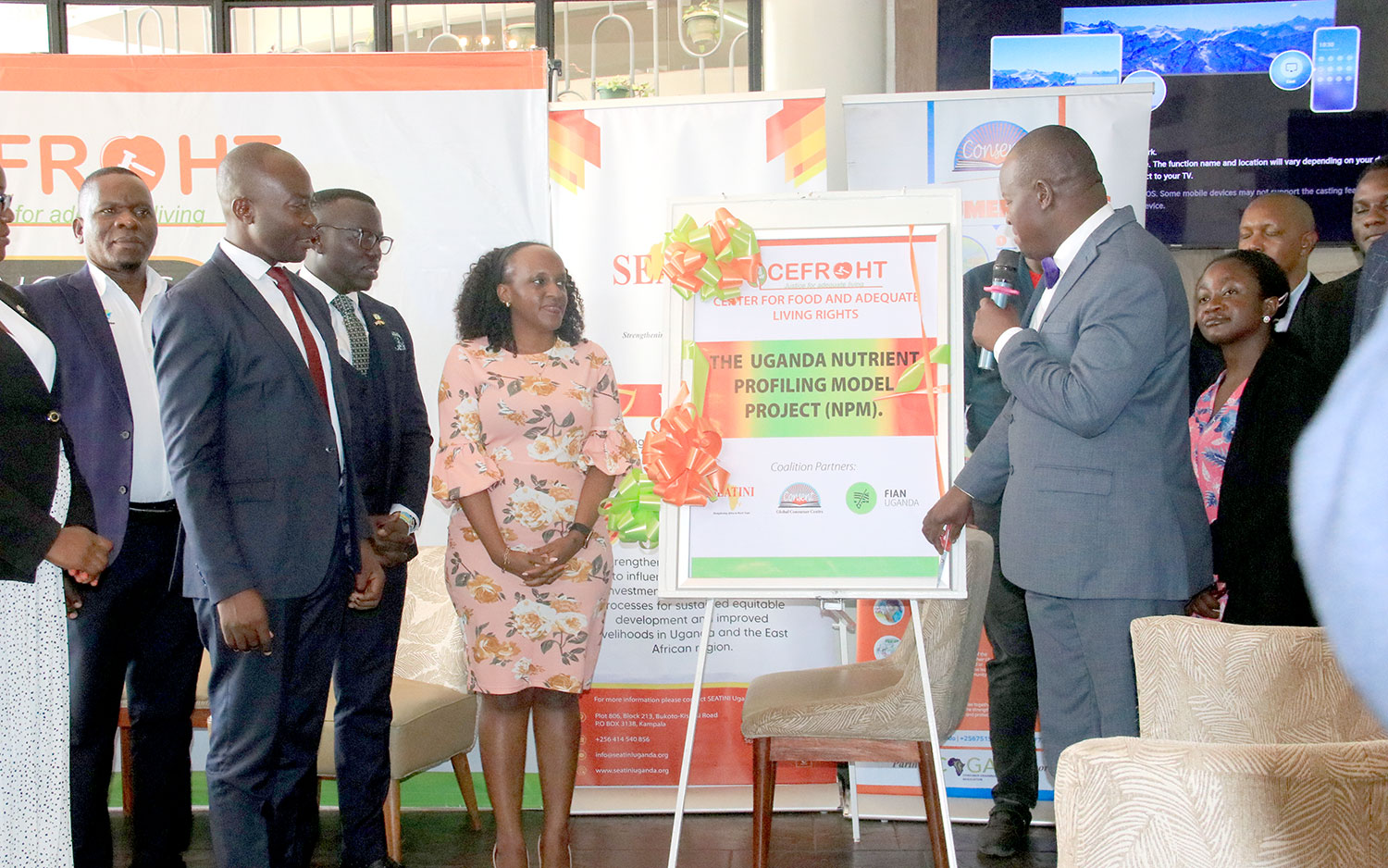
Uganda signs its Nutrient Profile Model; the EAC Agroecology Bill reaches EALA.